




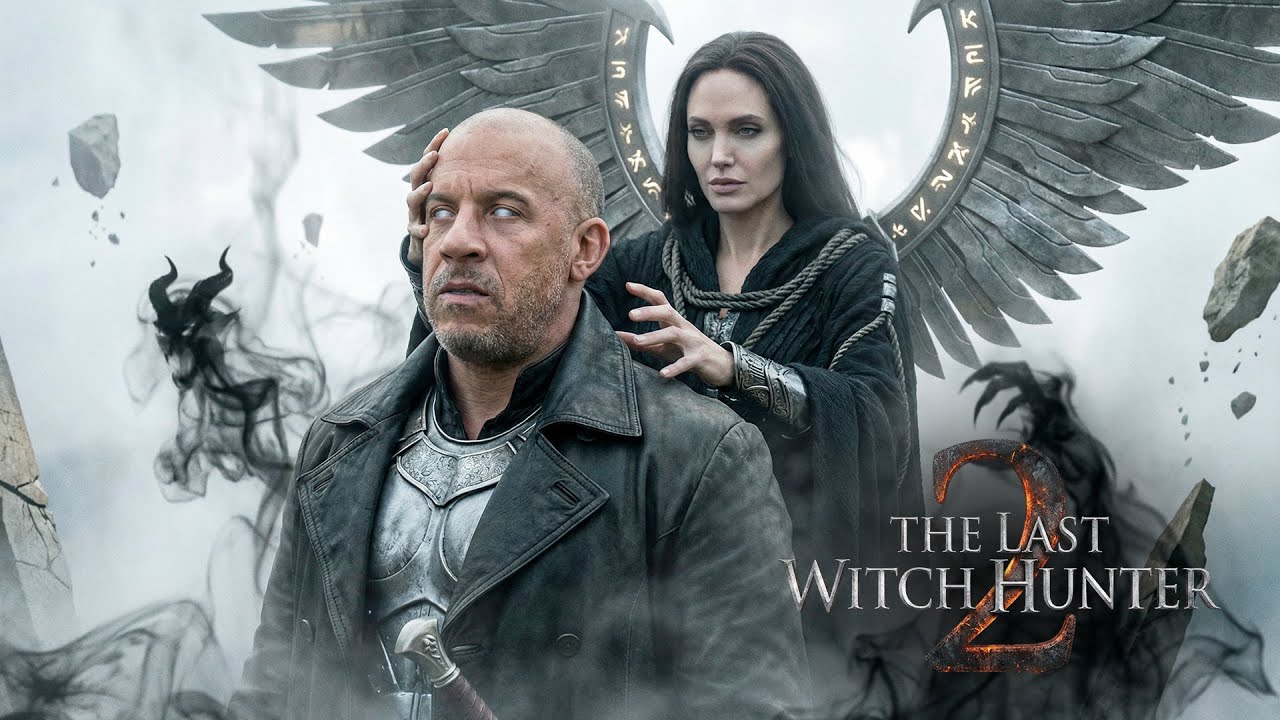
A Dark Fantasy Sequel That Understands the Cost of Living Forever
Sequels often arrive with louder spells and higher body counts, mistaking escalation for evolution. The Last Witch Hunter 2 (2026) avoids that trap by asking a quieter, more unsettling question: what happens when an immortal hero finally doubts the value of surviving? This follow-up expands its mythic canvas while tightening its emotional focus, delivering a fantasy action film that feels bruised, reflective, and unexpectedly intimate.

Story and Themes
The film opens in a world where secrecy has failed. Witches no longer lurk in shadows; they stride into the open, emboldened by ancient magic and forgotten gods stirring beneath the city. The Last Witch Hunter has endured centuries of wars and collapses, but this conflict carries a different weight. It is not merely about stopping an enemy; it is about confronting the erosion of purpose.

At its core, the narrative explores memory as both gift and curse. Immortality here is not portrayed as invincibility, but as accumulation. Every battle leaves residue. Every victory demands a price. The screenplay returns often to the idea that survival does not guarantee salvation, a theme that gives the film its melancholy power.

A Fragile Alliance
Central to the story is the uneasy partnership between the Witch Hunter and a woman caught between light and darkness. Their bond is not built on trust or romance, but necessity. This choice grounds the film emotionally. Destiny and sacrifice loom over their interactions, and the tension between them is allowed to breathe, resisting easy resolutions.
Direction and World-Building
The director leans into atmosphere with confidence. The city feels alive and wounded, its streets scarred by magic that crackles like lightning. Ash drifts through rain-soaked air, while the sky fractures between fire and frost. This is not fantasy as escapism; it is fantasy as consequence.
World-building is handled through texture rather than exposition. Prophecies echo through chants and ruins, not speeches. Forgotten gods feel ancient because they are treated with reverence and fear, not reduced to visual effects alone. The result is a setting that feels inhabited, not assembled.
Performances
The lead performance carries the film with a weary gravitas. This Witch Hunter is not defined by swagger, but by restraint. His silence often speaks louder than his dialogue, and the actor understands that immortality is best expressed through what is withheld. The supporting cast, particularly the female lead, adds emotional friction. Her internal conflict mirrors the film’s broader tension between hope and annihilation.
Character Depth Over Spectacle
What stands out is the film’s willingness to let characters sit with uncertainty. They make choices that leave scars rather than triumphs. Even antagonists are framed less as mustache-twirling villains and more as inevitabilities born from neglected history.
Action and Visual Effects
There is no shortage of action, but it is deployed with intention. Spells feel dangerous because they carry consequences. Each battle escalates not just in scale, but in emotional cost. The visual effects favor elemental contrast, fire against frost, light against rot, creating images that linger long after the credits roll.
- Magic sequences emphasize impact over excess.
- Creature designs feel rooted in folklore rather than spectacle.
- Action scenes serve character arcs instead of interrupting them.
Music and Sound Design
The score underscores the film’s somber tone, favoring low, resonant themes over bombast. Silence is used strategically, allowing moments of loss to resonate. Sound design gives magic a tactile quality, each spell crackling with weight and danger.
Final Verdict
The Last Witch Hunter 2 (2026) succeeds not because it is louder than its predecessor, but because it is wiser. It understands that the most compelling fantasy is not about defeating darkness, but about enduring it without losing oneself. The film’s central idea lingers: immortality does not prevent loss; it only ensures remembrance.
For viewers seeking a fantasy sequel with emotional depth, thematic ambition, and a haunting sense of atmosphere, this film offers more than spectacle. It offers reflection. And in a genre often obsessed with power, that restraint feels quietly radical.