



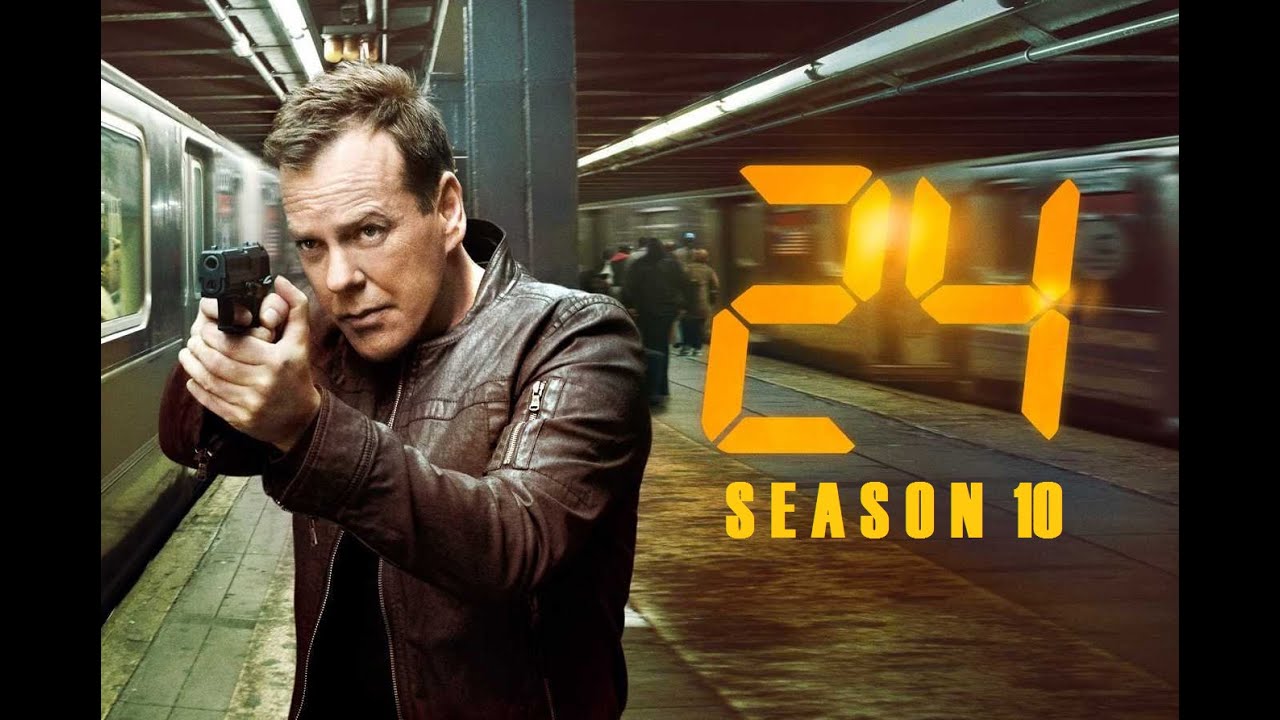
A Return to Real-Time Urgency
There is a particular kind of tension that 24 once owned outright, a white-knuckle relationship with time that made television feel dangerous again. Season 10: Dead Reckoning understands this legacy and treats it not as nostalgia, but as a moral weight. The ticking clock returns not merely as a gimmick, but as an accusation. Every second matters because Jack Bauer is older now, and the cost of his choices is no longer theoretical.

Jack Bauer, Older and More Haunted
Kiefer Sutherland slips back into Jack Bauer with the quiet authority of an actor who knows the sins of his character as well as his strengths. This is not the Jack who could outrun consequences through sheer force of will. He moves slower, thinks harder, and carries the emotional residue of every compromise he ever made. The performance is restrained, even mournful at times, and it gives the season its most compelling throughline: what happens when the man who saved the world too many times must finally answer for how he did it?

Familiar Faces, Sharpened Edges
Mary Lynn Rajskub’s Chloe O’Brian remains the moral and intellectual spine of the series. Her battle is no longer just with systems and firewalls, but with a digital landscape that has grown more predatory and less forgiving. Rajskub plays Chloe with urgency and weariness, a woman who understands that information is power, but also responsibility.

Carlos Bernard’s return as Tony Almeida is handled with admirable restraint. Tony has always been a character shaped by loss and divided loyalties, and Dead Reckoning leans into that ambiguity. Every scene with him carries a low hum of dread, as if the past itself is waiting to betray someone.
A New Wild Card in the Deck
Pedro Pascal enters the series as a high-level operative whose loyalties are as fluid as the alliances forming around him. Pascal brings a layered charisma that resists easy categorization. He is neither hero nor villain, but something more interesting: a survivor navigating a world where ethics are situational and trust is a liability. His dynamic with Bauer is one of the season’s strongest elements, built on mutual respect and the unspoken understanding that one of them may have to pull the trigger first.
Action with Consequences
Explosions, covert operations, and interrogations return, but they are framed differently this time. Violence is not celebrated; it is accounted for. The show remains thrilling, but it is also sobering. Each act of force ripples outward, affecting civilians, governments, and the already fragile psyche of its protagonist.
- Action sequences are tightly edited and purposeful.
- The real-time format enhances suspense without feeling repetitive.
- Moral dilemmas drive the plot as much as physical danger.
Political Paranoia in a Modern Context
Dead Reckoning is at its best when it interrogates the machinery of power. Cyber warfare, misinformation, and geopolitical brinkmanship replace some of the blunt-force threats of earlier seasons. The writing acknowledges that modern warfare is often invisible, fought in data centers and diplomatic back rooms, where a single decision can ignite global catastrophe.
The Clock as Judge
The real-time structure once felt like a stylistic flourish. Here, it feels like judgment. The clock does not just count down to disaster; it counts down to reckoning. Jack Bauer is no longer racing only to stop an attack. He is racing against the sum total of his own history.
Final Verdict
24 – Season 10: Dead Reckoning succeeds because it understands that endings matter. It does not attempt to outdo the past through spectacle alone. Instead, it reflects on what the series has always been about: the unbearable cost of doing what must be done. This is lean, intelligent television that respects its audience and its characters.
For longtime fans, it offers closure without sentimentality. For new viewers, it stands as a tense, morally complex thriller that trusts silence as much as explosions. The clock starts ticking one last time, and when it stops, it leaves behind something rare in modern television: a sense that every second truly counted.